

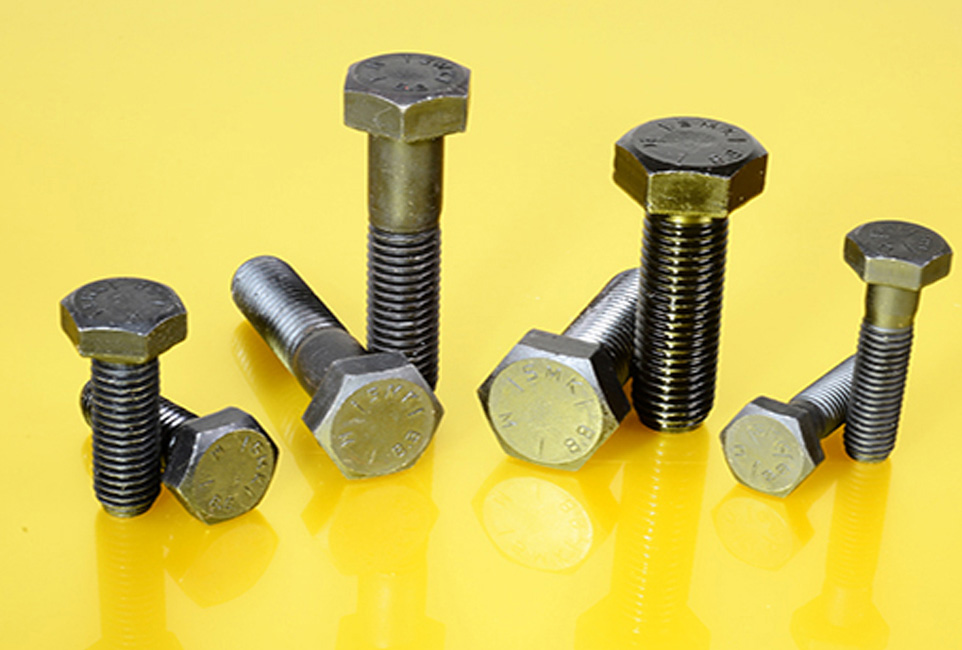
One of the most common questions in structural work, machinery, and even purchasing departments is: “The nuts look identical — so what do the different numbers on the head mean?” These small parts are often overlooked, yet they are the critical joints that determine the strength of the entire system. The numbers stamped on a bolt head aren't just a product code — they indicate the part's “capability”: how much load it can bear, how much it can flex, and when it will begin to deform. Choose the wrong one, and even an assembly that looks solid can fail once it's put to real use.
In this article, Samakkee Salukpan will help you understand these numbers in simple terms, along with guidance on choosing the right one for each situation — so safety and value go hand in hand.
Decoding the Numbers on a Bolt Head — Understand It in Minutes
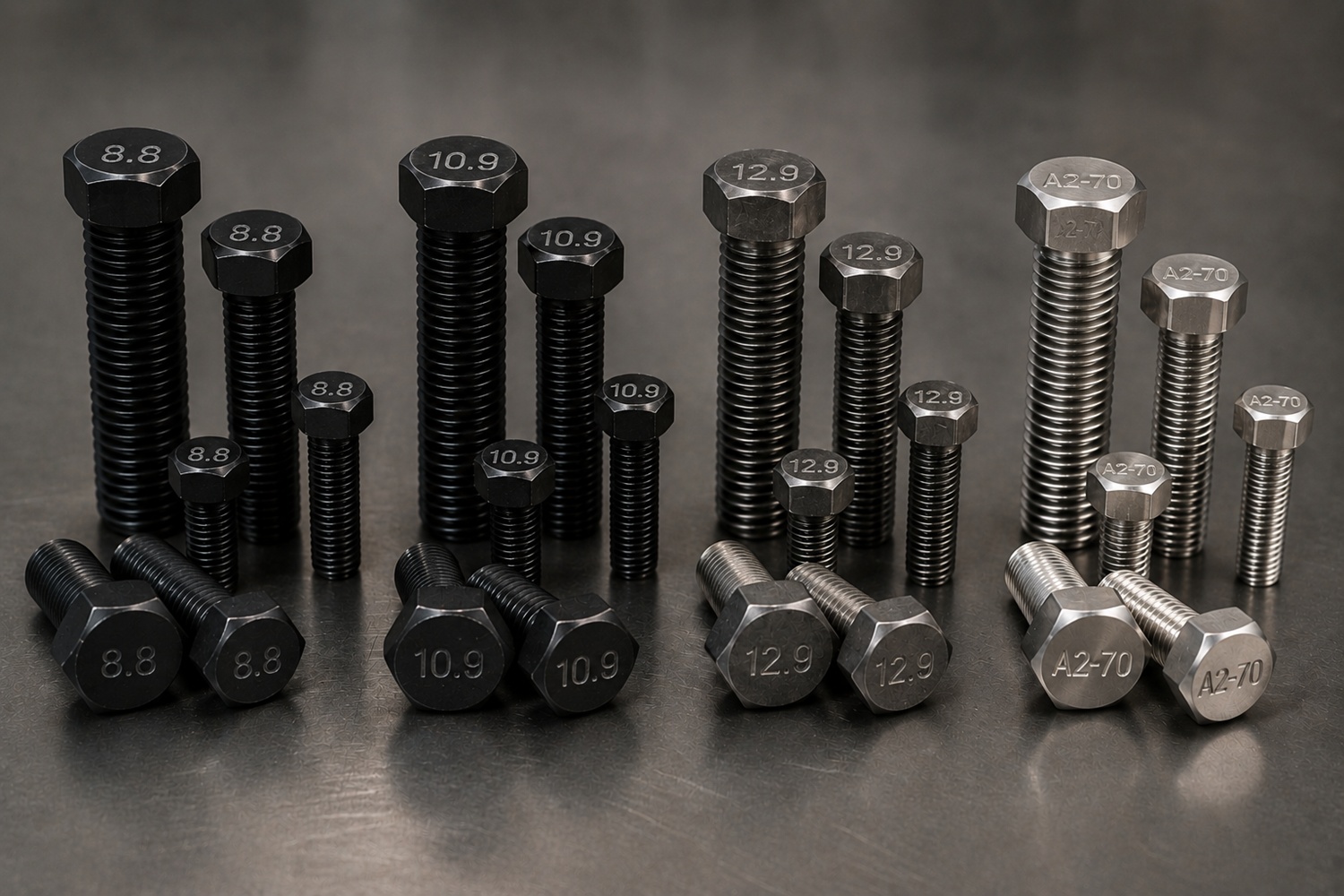
Numbers like 8.8, 10.9, or 12.9 are standard values that indicate the “strength of the material” — specifically its tensile strength and its ability to stretch before deforming.
To put it simply:
- The first number indicates the overall strength level.
- The number after the decimal point indicates the ratio of how much it can stretch before deforming.
The higher the number, the more load the bolt can bear, the stronger it is, and the better suited it is to work involving higher impact or tensile forces.
A Closer Look at Each Grade — Choose the Right One for Long-Lasting Use
Grade 8.8 – The Versatile Standard Choice
This grade is the “go-to for general work,” chosen across many industries — whether basic structural work, machinery assembly, or the automotive industry.
Its defining quality is balance — both toughness and strength — giving it good tensile capacity while remaining flexible enough not to be brittle, making it ideal for work that needs long-term stability.
If you're looking for a cost-effective and safe starting point, Grade 8.8 nuts and bolts are often an excellent fit.
Grade 10.9 – For Higher-Load Applications
When projects grow larger or involve vibration — such as large structures, industrial machinery, or systems under continuous load —
Grade 10.9 comes into play. A manufacturing process that adds hardness gives it clearly higher load capacity than 8.8, making it ideal for work that demands an extra level of confidence.
Grade 12.9 – The Choice for Work That Can't Fail
This is the grade designed specifically for heavy-duty work, handling very high compression, tension, and shock loads. It's commonly found in engine parts, heavy machinery, or critical joints where even a small failure can affect the whole system.
For work like this, it's not just about choosing the right grade — you should also choose a supplier of Grade 12.9 nuts and bolts that meets proper standards and provides clear certification, so you can be sure the specifications you receive are genuine.
“Stainless Steel” — The Alternative Material When the Environment Is a Factor
When a structure has to face water, moisture, or chemicals, no matter how hard the steel is, it will lose to corrosion and rust. Stainless steel nuts therefore become an important option. The popular grades are as follows:
- Stainless Steel 304 – Good rust resistance in normal environments and easy to maintain — suitable for general work, decorative applications, or the food industry.
- Stainless Steel 316 – Clearly more resistant to acids, alkalis, and salt spray than 304 — suitable for work in harsh environments, such as near the sea or in chemical plants.
Choosing stainless steel nuts and bolts to match the working conditions significantly extends the life of a structure and reduces long-term repair costs.
A Clear Summary — Making the Choice Easier at a Glance
| Type / Grade | Key Strengths | Suitable Applications |
| Grade 8.8 | Balanced strength, tough, good tensile resistance | General structural work, machinery assembly, automotive work |
| Grade 10.9 | Hardened; withstands high loads and vibration | Large structures, industrial machinery, continuous-load applications |
| Grade 12.9 | Maximum strength; handles high shock and compression | Heavy machinery, engine parts, critical joints |
| Stainless Steel 304 | Good rust resistance; suited to general environments | Decorative work, food industry, humid environments |
| Stainless Steel 316 | Excellent resistance to acids, alkalis, and sea spray | Coastal work, chemical plants, highly corrosive areas |
More Than Just Specs — Confidence in Quality
While choosing the right fastener grade is an important starting point, there's another thing you shouldn't overlook: “manufacturing quality.” The market has plenty of products with mismatched specs or inconsistent quality. Buying from anut factorythat meets proper standards gives you confidence that every part has genuinely passed quality control — in materials, production process, and pre-delivery inspection. These factors all affect real on-site performance, reduce the risk of failure, and help every project move forward more smoothly and sustainably.
Conclusion
A nut may be just a small part, but it plays a vital role in the safety of an entire structure. Understanding the difference between grades 8.8, 10.9, 12.9, and the various stainless steel grades isn't just a technical matter — it's the foundation of a decision with long-term consequences.
When you choose both the right “grade” and the right “source,” what you build isn't just strong today — it's ready to handle future use with confidence. And that is what turns a single structure into work you can truly rely on.